Birding in Central Park

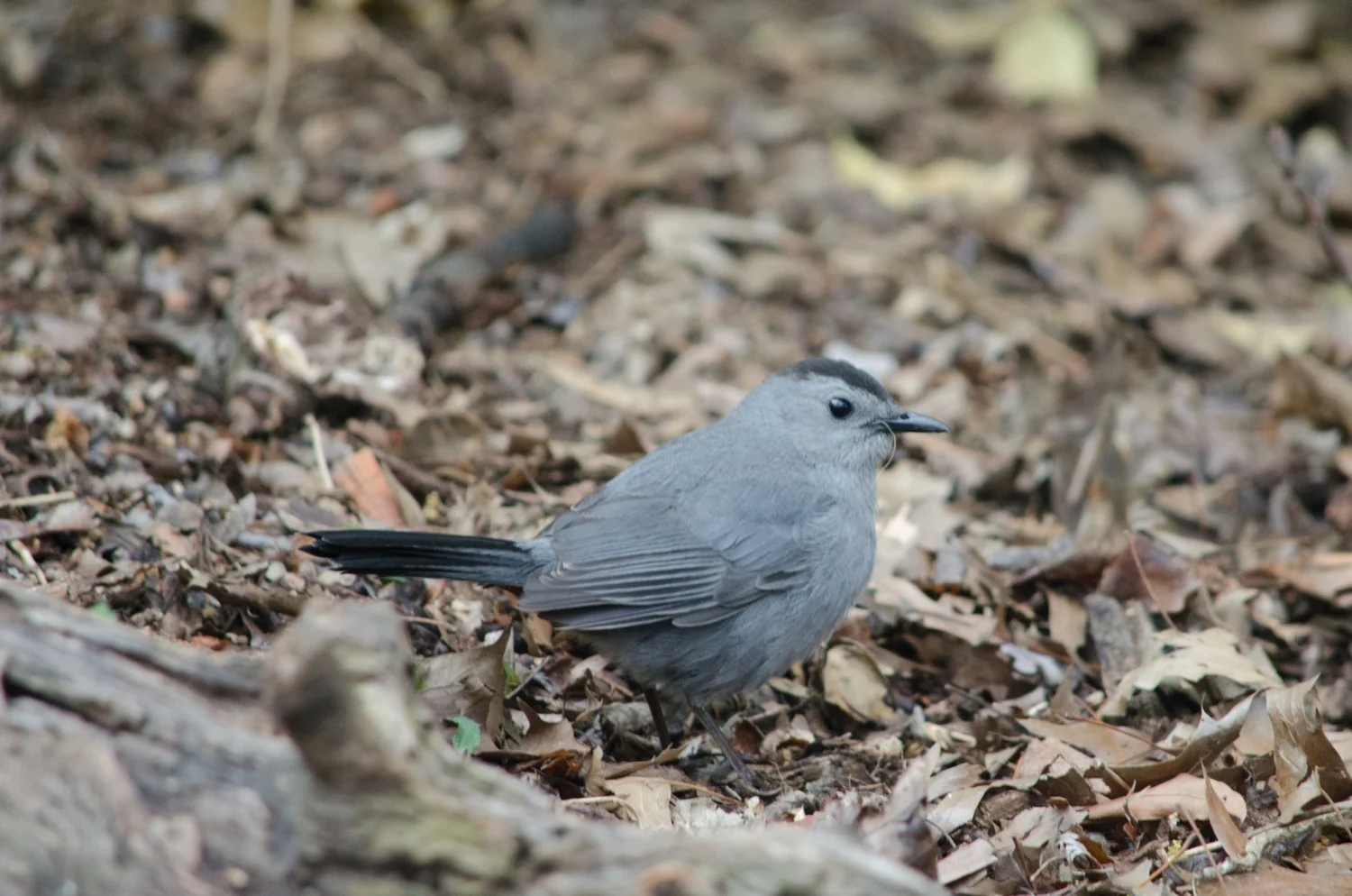
In the early morning hours of Saturday, April 30, evolutionary biologist Spencer Galen led the MSNH on a guided bird walk in Central Park to see spring migrants. We saw 36 species and highlights included a Ruby-throated Hummingbird, Blue-winged Warbler and Baltimore Oriole. For a complete list of species observed, see below:

American Goldfinch (>3)

American Robin (song, >3)

Baltimore Oriole (2)

Black-and-white Warbler (song, 2-3)

Black-capped Chickadee (song, >3)

Blue-headed Vireo (2)

Blue Jay (calls, >3)

Blue-winged Warbler (song, 1)

Canada Goose (>3)

Chestnut-sided Warbler (song, 1-2)

Common Grackle (call, >3)

Common Yellowthroat (1)

Double-crested Cormorant (1)

Downy Woodpecker (1-2)

Eastern Towhee (song, 2-3)

Gray Catbird (2-3)

Hermit Thrush (1-2)

House Wren (song, 2)

Indigo Bunting (song, 2)

Mallard (>3)

Mourning Dove (song, >3)

Nashville Warbler (song)

Northern Cardinal (song, >3)

Northern Flicker (call, 1)

Northern Parula (song)

Northern Waterthrush (1)

Ovenbird (1)

Palm Warbler (song, 1)

Prairie Warbler (1)

Red-winged Blackbird (song, 2-3)

Ruby-crowned Kinglet (song, >3)

Ruby-throated Hummingbird (1)

Swamp Sparrow (1)

Tufted Titmouse (song, >3)

White Throated Sparrow (song, >3)     

Yellow Warbler (song, 1)                                                                                                

Spencer Galen is a Ph.D. candidate at the Richard Gilder Graduate School of the American Museum of Natural History. He received his B.S. from the University of Delaware and an M.S. from the University of New Mexico where he studied the evolution of birds in the Peruvian Andes. Galen has spent time studying birds throughout North and South America, including Costa Rica, Ecuador, Peru, and most recently Cuba. He is originally from New Jersey where he found a passion for studying birds as a child while observing the amazing spring migration that takes places across the eastern United States every year. Presently, his Ph.D. focuses on the evolution of malaria parasites in birds. To learn more about Spencer and his research, please visit his website here.

If you are interested in learning more about birds seen on this trip and learning their calls, please visit All About Birds at the Cornell Lab of Ornithology.      

To view photos from this event, please visit our gallery. All photos were taken by Maurice Chen.

Lichens in Central Park

On Sunday, April 17, The Metropolitan Society of Natural Historians was led by lichenologist, Jessica Allen from the New York Botanical Garden on a lichen tour in Central Park. We came across several species of lichens growing on rocks and trees that have been largely undisturbed by the throngs of people who frequent the park. Lichens can be found growing throughout the world in some of the most extreme environments, however they are particularly susceptible to pollution. Those that we came across are some of the few that can tolerate pollution. A full species listing of lichens in Central Park can be found in the online field guide created by Allen.

Jessica L. Allen, Lichens of Central Park; http://education.eol.org/fguides/fieldguide-view.php?guidekey=820

To view more photos from this event, please visit our gallery. All photos were taken by Maurice Chen. 

Geology of Manhattan Skyscrapers

On Sunday, April 3, Jasmine Bayron, Ph.D. student at the CUNY Graduate Center and American Museum of Natural History, led the MSNH on a walk through Central Park. She showed us evidence of glacial recession (which can be seen in the striations of Umpire Rock) and pointed out the erratics left behind by these glaciers. After leaving the park, we examined many small invertebrates in the fossiliferous limestone of Upper East Side buildings. Several of the fossils we observed were bivalves, brachiopods, crinoids and bryozoans.

To view more photos from our event, please visit our gallery. All photos were taken by Maurice Chen

4th Annual Symposium

On Sunday, February, 28th, The Metropolitan Society of Natural Historians hosted its 4th Annual Symposium in collaboration with the Science Research Mentoring Program (SRMP) of the American Museum of Natural History (AMNH) in the Linder Theater at the AMNH. The SRMP program provides New York City high school students with an opportunity to undertake year-long research projects with AMNH scientists making them more confident and better equipped to pursue their research interests upon entering university. The symposium consisted of 10-minute presentations by 8 researchers from renowned institutions across the tristate area including the AMNH, Princeton University and the New York Botanical Garden. Topics included understanding how fish are able to detect water currents, understanding the paleodiet of our extinct primate relatives, using jaguar scat for conservation efforts, identifying cryptic diversity of orchids and much more. With over 90 attendees, including 49 students from the SRMP program, this was our largest symposium yet! We would like to thank Dr. Mark Weckel and Dr. Rae Wynn-Grant of the AMNH for assistance with organizing, Allison Bronson of the AMNH for helping with logistics, all presenters and attendees for participating, and the Doris Duke Charitable Foundation for supporting conference participation by SRMP students.

To view more photos from this event, please visit our gallery. All photos were taken by Maurice Chen. 

Dinosaur Hall Tour at AMNH

On Saturday, January 30th, The Metropolitan Society of Natural Historians was led on a wonderful tour of the American Museum of Natural History's dinosaur exhibit, featuring the latest and largest addition, the Titanosaur spanning 120 feet long from top of the head to tip of the tail. We were led by dinosaur expert, Danny Barta who expounded on the evolution of dinosaurs, and the hypotheses concerning their end and their evolution into the birds around us today. We learned the differences between the two major groups of dinosaurs: ornithischians and saurischians and listened to Barta describe his own research on dinosaur reproduction, growth and development.

Visit our gallery to see more photos from this event.

NY Eats Bugs


On Saturday, November 21, The Metropolitan of Natural History, The New York Entomological Society, Alimentary Initiatives and The Explorers Club hosted NY Eats Bugs at The Explorers Club on east 70th street between Park and Madison Avenues. During the first half, Crickets and Cocktails, guests enjoyed a variety of hors d’oeuvres and cocktails in the library and on the terrace featuring several edible insects including crickets, mealworms, and water bugs and a special entomophagy cocktail known as Cricket Bitters. After the cocktail hour, guests gathered into the Clark room to listen to presentations given by Dr. Phil Barden, a paleoentomologist from Rutgers University and Katharina Unger, an entrepreneur in entomophagy with Baron Ambrosia, host of the show The Culinary Adventures of Baron Ambrosia, acting as the MC. The second half of the event, New York Banquet of Bugs, featured a six-course dinner prepared by chefs Natalia “Cookie” Martinez from Toronto and Mario Hernandez from The Black Ant restaurant on the lower east side.


To view more photos from this event, please visit our gallery. Photo credit to Shifaan Thowfeequ