
Our Team

2022 - Glenn, Stephanie and Harald at Monarch Tagging in Central Park

2019 - Glenn, Stephanie and Harald at 7th Annual Symposium of MSNH
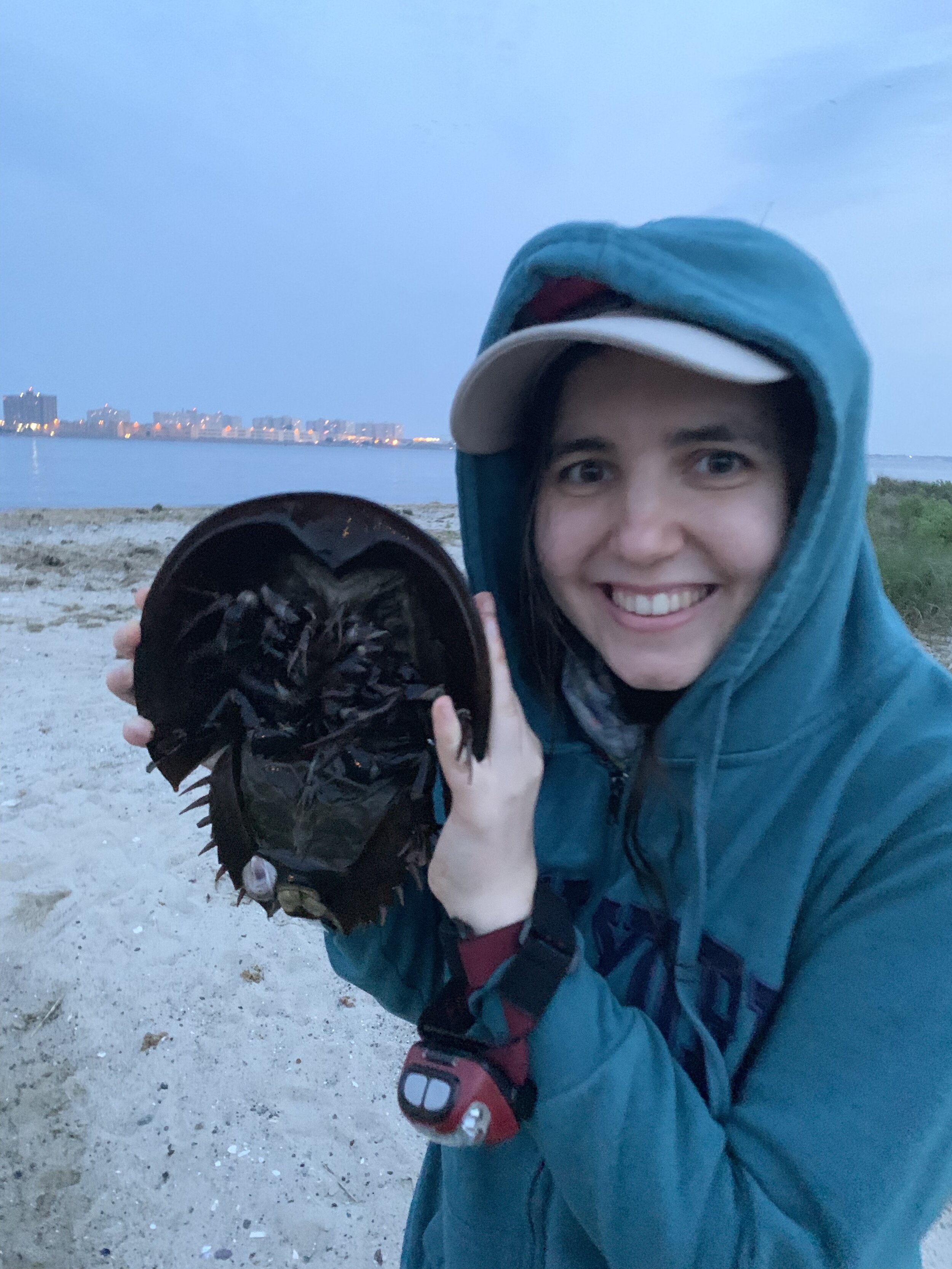
Stephanie F. Loria, Ph.D.
President and Co-Founder
Stephanie Loria is a native of Queens, New York. She fell in love with small terrestrial arthropods at the age of 10 and as a high school student took classes in the After School Program at the American Museum of Natural History (AMNH) and interned in the museum’s Science Research Mentoring Program working closely with scientists in the Center for Biodiversity and Conservation. She completed her B.S. in Environmental Studies: Ecology and Biodiversity in 2011 at Sewanee: The University of the South in Sewanee, Tennessee, where she was an active member and president of the Sewanee Natural History Society, the inspiration for the MSNH. As an undergrad, Dr. Loria cultivated her love for invertebrates, studying gene flow among populations of cave millipedes in southeastern North America and interning at the Field Museum of Natural History in Chicago on Malagasy Giant-Pill Millipedes. In 2011, she joined the Richard Gilder Graduate School and Scorpion Systematics Research Group at the AMNH to pursue her Ph.D. in Comparative Biology on Southeast Asian scorpions. She completed her Ph.D. in 2016 and since then has served as an Adjunct Instructor at the State University of New York College at Old Westbury, an instructor for the After School Program at the AMNH, and a postdoc at several natural history museums including AMNH, the California Academy of Sciences in San Francisco and Museum of Nature Hamburg, Leibniz Institute for the Analysis of Biodiversity Change in Hamburg, Germany. Presently, she is an Assistant Professor and Curator of Terrestrial Invertebrates at the University of Central Oklahoma in Edmond.

Harald Parzer, Ph.D.
Vice President
Harald Parzer was born and raised in Salzburg, Austria, a place where the hills still are alive. Because of this, Dr. Parzer developed a deep love for anything "zoology" and went on to study biology at several universities, including the University of Salzburg, Austria; University of Hong Kong, China; and University of Wuerzburg, Germany. Eventually, he went to the University of Vienna, Austria where he received his M.S., studying the mating system of the soldier beetle Rhagonycha fulva. In addition to soldier beetles, he also worked on several other organism groups, including leaf cutting ants, bats, and apes. Dr. Parzer left Austria in 2006 to pursue a Ph.D. at Indiana University, working on the evolution of dung beetle genitalia. After completion of his Ph.D. in Evolutionary Biology, he accepted a position as an Assistant Professor at Fairleigh Dickinson University in the lovely town of Madison, New Jersey. In addition to teaching courses like Biological Diversity, Evolution, and Entomology, Dr. Parzer, now Associate Professor, continues to conduct research with undergraduate students on a variety of topics, including butterfly wing evolution.
Glenn Doherty
Treasurer

Glenn Doherty is a native New Yorker with many varied hobbies. He works at the Icahn School of Medicine, part of Mount Sinai Hospital, and supports customers' scientific imaging needs. As science is more of a hobby to him, he uses this position as a way to stay on top of new and exciting science, and to learn more about the myriad scientific fields out there, without the need to work in those fields exclusively. Both on professional and personal levels, Glenn helps people figure out what type of equipment - from lighting and cameras, to data storage devices - is best for capturing and recording the information that's most crucial to their realm of study, from mountains to microscopic particles. Glenn graduated from the Rochester Institute of Technology (RIT) in 2010 from the Biomedical Photographic Communications major and has been fortunate enough to study underwater, special effects and high-speed photography. He is an avid hiker, camper, and woodworker, and he hopes in the future to run his own furniture restoration business.